What Separates Great NJ Roofers From the Rest
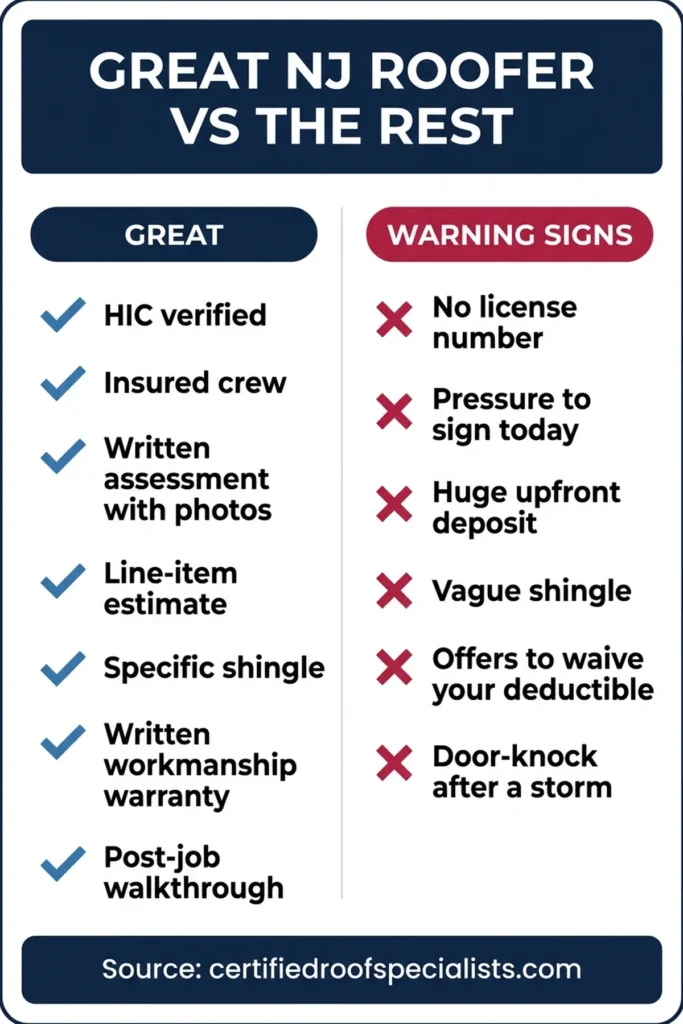
What separates great NJ roofing contractors is not obvious from a truck. NJ has thousands of roofing contractors, and the difference is not obvious from a truck graphic. What separates great NJ roofers from the rest comes down to verifiable facts and a consistent process: a verified HIC registration, insured crews, a written inspection before the estimate, line-item quotes that name the exact shingle, a workmanship warranty in writing, and a post-job walkthrough. Confirm the basics, then judge the process.
Some NJ roofers are excellent, some will take your deposit and disappear, and most are in the middle. Knowing how to tell them apart comes down to a few things you can verify before hiring anyone. For the question-by-question version of this, see our how to choose a roofing contractor in NJ guide; this one is about the signals that separate the best from the average.
What Separates Great NJ Roofing Contractors: The Basics
1. An NJ Home Improvement Contractor (HIC) registration
NJ law requires any contractor performing home improvement work over $500 to hold an HIC registration from the Division of Consumer Affairs. Ask for the number and verify it yourself at njconsumeraffairs.gov; it takes 30 seconds. A contractor who cannot produce a number, or says licensing does not apply to them, has already told you everything you need to know.
2. General liability insurance and workers’ compensation
Ask for certificates of insurance, both general liability and workers’ comp, before any work starts, with you named as additional insured on the liability policy. Workers’ comp is critical: if a crew member is injured on your property and the contractor does not carry it, you can be held liable. This is not hypothetical; it happens.
3. A physical NJ address
Storm chasers come through NJ from out of state after a weather event, work door-to-door, collect deposits, and sometimes do not come back. An established contractor with a physical NJ address has a reputation to protect and a business to run, a different working relationship than someone who will be three states away by the time you find a problem.
What Great NJ Roofers Actually Do
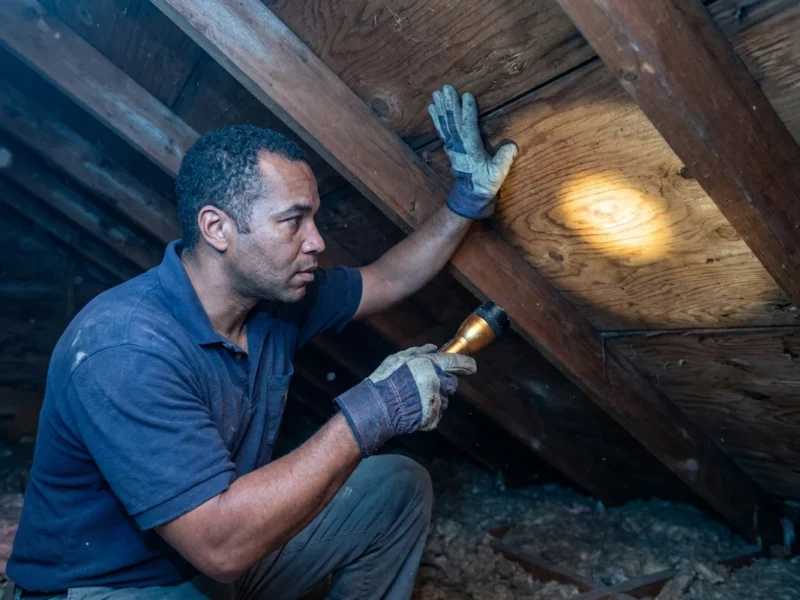
They give you a written roof assessment before the estimate. Not a sales call: a licensed team member walks the roof, evaluates condition zone by zone, photographs what they find, and delivers a written report. That document should exist before any estimate is written.
Their estimates are line-item documents. You should see the specific shingle brand and product line, underlayment type, valley treatment, ventilation plan, cleanup terms, and warranty terms, all itemized. A single number is not an estimate you can evaluate or compare.
They know when a permit is required. A standard single-family re-roof in NJ is classified as ordinary maintenance and needs no permit; structural work, rooftop solar, and condominium or multi-unit buildings do. A great contractor pulls the permit on those jobs and installs everything to code regardless, so the work would pass inspection whether or not one is required.
They can register a manufacturer-backed enhanced warranty. GAF Master Elite and CertainTeed SELECT ShingleMaster contractors complete training and audits and can register enhanced warranties that cover both materials and labor. GAF states only about 3 percent of US contractors qualify for Master Elite. Ask any contractor which program they can register and verify the credential with the manufacturer.
They give you a workmanship warranty in writing before you sign. Manufacturer warranties cover the shingles; workmanship warranties cover the installation, and installation errors are the most common cause of early failure. A verbal warranty promise is not enforceable.
They show up for the post-job walkthrough. Before the crew leaves, the lead should walk the finished roof with you, confirm cleanup, hand over the warranty documentation, and answer questions, not send an invoice and disappear.
Red Flags in Plain Language
- No license number on the estimate or website. If they will not or cannot provide their NJ HIC number in writing, stop there.
- Pressure to sign today. “This price expires at midnight” is a tactic to prevent a second opinion. Legitimate contractors do not rescind estimates overnight.
- More than about a third of the cost due before work starts. A 25 to 33 percent deposit is normal; paying most of the job up front puts all the risk on you.
- Cannot name the specific shingles. No brand, product line, or weight class means you cannot hold them to an unspecified product.
- Offers to waive your insurance deductible. This is illegal in NJ and a bright-line reason to walk away; it can expose you to an insurance-fraud problem.
- An extremely low bid. Not 10 percent lower but 30 to 40 percent lower means something is being cut: lower-grade materials, skipped underlayment, a substandard crew, or missing warranty coverage.
- Door-to-door solicitation right after a storm. Established local contractors do not need to knock days after a weather event. Ask for the NJ HIC number before the conversation goes further.
- Verbal-only communication. No written estimate, warranty, or scope means no documentation if something goes wrong.
Here's the CRS process. Hold us to it.
A written assessment with photos before any estimate, licensed and insured crews, a line-item quote, and a workmanship warranty in writing. Start with a free inspection and judge us against it.
How to Use Estimates to Find the Right Contractor
Get three estimates minimum. This is not just about price; it is about the information the estimates reveal. Compare them on equal terms: if one specifies GAF Timberline HDZ and another says “architectural shingles,” you are not looking at comparable bids.
Pay attention to what each contractor explains. One who walks you through what they are installing and why (including ventilation, underlayment choice, and valley treatment) understands the work. One who hands you a number without explanation is not who you want making decisions on your roof. The right estimate is specific, complete, and from a contractor who can explain every line. The 10 questions to ask any NJ roofing contractor make those conversations sharper.
How to choose a roofing contractor (7 questions) · 10 questions to ask any NJ roofer · NJ roofing warranty guide · Monmouth County
Last updated September 23, 2026. Written by the Certified Roofing Specialists Inc. team, licensed New Jersey roofing contractors serving Monmouth, Ocean, Middlesex, Somerset, and Union Counties.
Common questions
Frequently Asked Questions
How do I verify an NJ roofing contractor's license?
Ask for their NJ Home Improvement Contractor (HIC) registration number and check it at njconsumeraffairs.gov; it takes about 30 seconds. Any contractor working over $500 must hold one. A contractor who cannot produce a number, or says licensing does not apply to them, has told you what you need to know.
What deposit is normal for a roof replacement in NJ?
A deposit in the 25 to 33 percent range at signing is normal. Paying for the full job, or a large share of it, before any shingle goes on puts all the risk on you. The balance should be due after the final walkthrough, and you should pay by a traceable method, never cash.
How many roofing estimates should I get?
At least three, compared on equal terms. If one specifies “GAF Timberline HDZ” and another just says “architectural shingles,” they are not comparable bids. The lowest price is rarely the best value; specificity and a contractor who can explain every line matter more.
-

Do You Need a Permit to Replace a Roof in NJ?
Roof replacement permit NJ: a standard one or two-family re-roof needs no permit. Here is when you do…
-
Roof Replacement Cost in Middlesex County NJ (2026)
Roof replacement cost Middlesex County NJ: 2026 price ranges by home size for Edison, Woodbridge, and Old Bridge,…
-
Roof-Over vs Tear-Off in NJ: What the Code Says and What It Costs
Roof over vs tear off NJ: why a second layer is cheaper now but costs more later, what…