Roof-Over vs Tear-Off in NJ: What the Code Says and What It Costs
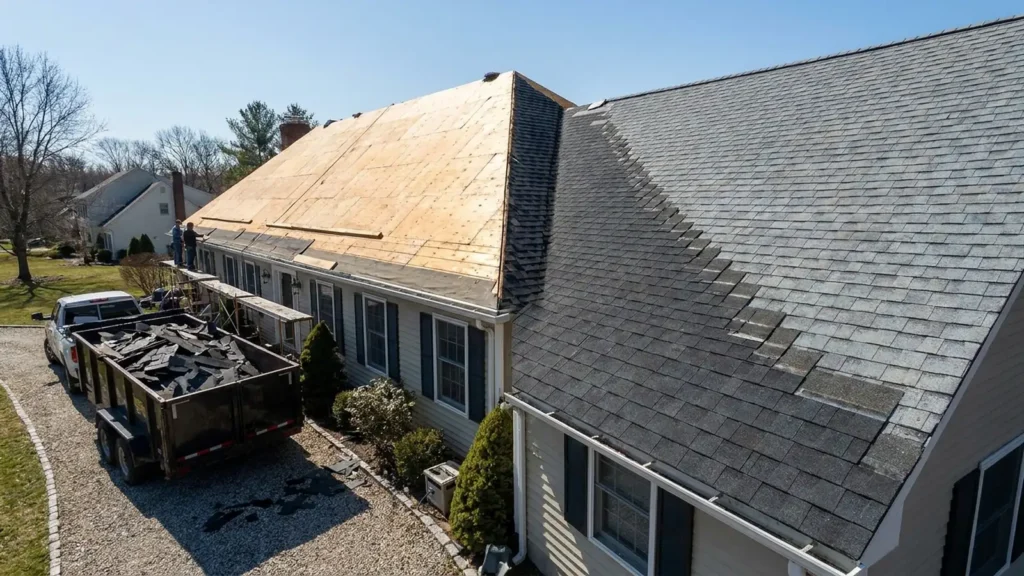
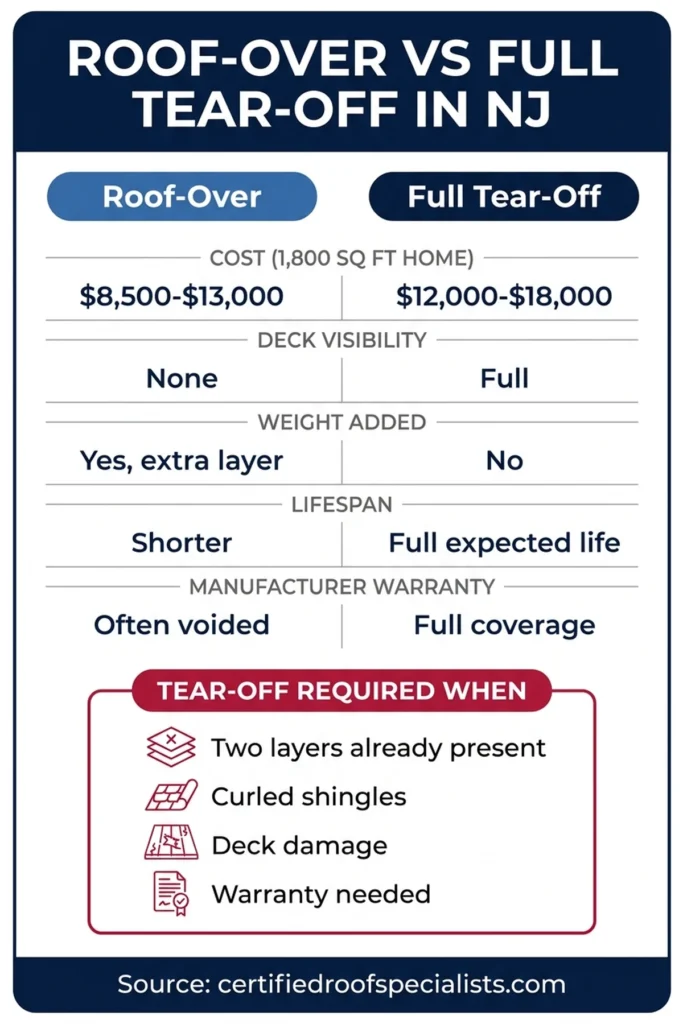
The roof over vs tear off NJ choice changes what you pay now and later. In the roof-over vs tear-off decision for NJ homes, you can layer new shingles over one existing layer in most situations, but NJ code allows a maximum of two layers, so a second overlay is never permitted. An overlay saves roughly $2,000 to $4,000 up front, but it hides the deck, shortens shingle life, and often voids the manufacturer warranty. For most roofs, a full tear-off is the better long-term value. A standard one- or two-family re-roof, either way, needs no permit.
The question is not whether an overlay is legal. It usually is. The question is whether it is the right call for your specific roof, once you account for what you cannot see underneath. Here is the honest comparison.
Roof Over vs Tear Off NJ: At a Glance
| Factor | Full tear-off | Roof-over (overlay) |
|---|---|---|
| NJ code | Always allowed | Allowed over one existing layer only (two-layer max) |
| Cost, 1,800 sq ft home | $12,000 to $18,000 | $8,500 to $13,000 (no disposal) |
| Deck inspection | Yes, full visibility after tear-off | No, deck condition stays unknown |
| Weight on the structure | Removes the old material | Adds 2 to 4 lbs per sq ft permanently |
| Shingle lifespan | Full manufacturer-rated life | Reduced; trapped heat ages it faster (often 18 to 22 years on a 30-year shingle) |
| Manufacturer warranty | Full coverage available | Many makers exclude or limit overlays |
| Next replacement | Starts fresh on a clean deck | Forces a tear-off of two layers, at higher cost |
| Permit (1-2 family re-roof) | None, ordinary maintenance | None, ordinary maintenance |
| Best for | Almost every roof; anyone keeping the home or the warranty | A documented budget bind with one flat layer and a confirmed-sound deck |
| The honest downside | Higher upfront cost and disposal | Hides deck problems and shortens the new roof’s life |
The bottom line: an overlay is a real way to save money in a budget bind, but it defers a known decision and adds an unknown one, so it earns its place only in a narrow set of cases.
The Hidden Cost of Overlays
The $2,000 to $4,000 you save on disposal and labor with an overlay can become a $5,000 to $8,000 surprise at the next replacement. On a tear-off, your contractor sees the deck and repairs soft spots, rot, and delaminated sheathing during the job. On an overlay, the deck is invisible, so you are building a new roof on a foundation you cannot inspect.
Years from now, the next contractor tears off two layers, and any deck damage found then needs repair on top of a replacement that already costs more for the extra tear-off labor. The overlay deferred a known decision and stacked a possible unknown on top of it.
Heat is the other hidden cost. Old shingles hold heat, so new shingles laid over them sit on a warmer substrate than bare decking. Higher sustained underside temperatures speed oil loss from the asphalt and granule adhesion failure, which is why a 30-year shingle on an overlay may show significant wear at 18 to 22 years. An overlay also makes the warranty issue worse, which connects directly to what voids a roof warranty in NJ.
When Each One Is the Right Answer
| An overlay can make sense if… | Tear-off is the only right answer if… |
|---|---|
| Only one shingle layer is present (verify at a rake edge or from the attic) | Two layers are already present (NJ code requires tear-off) |
| The existing shingles lie flat, with no curling, cupping, or lifting | The shingles are curled or irregular, so a new layer will not lie flat |
| The deck looks sound from an attic inspection (no soft spots or staining) | Deck damage is visible from the attic or at the rake edge |
| A real, documented budget bind, and you plan to sell within 2 to 3 years | You want a valid manufacturer warranty (most require bare decking) |
| An overlay stops an active leak now while you plan a full replacement | The home is 40-plus years old with no confirmed deck replacement |
Even when every overlay condition is met, the buyer of the home eventually pays for the tear-off, usually as a repair credit at the closing table.
Find out if your roof can take an overlay at all
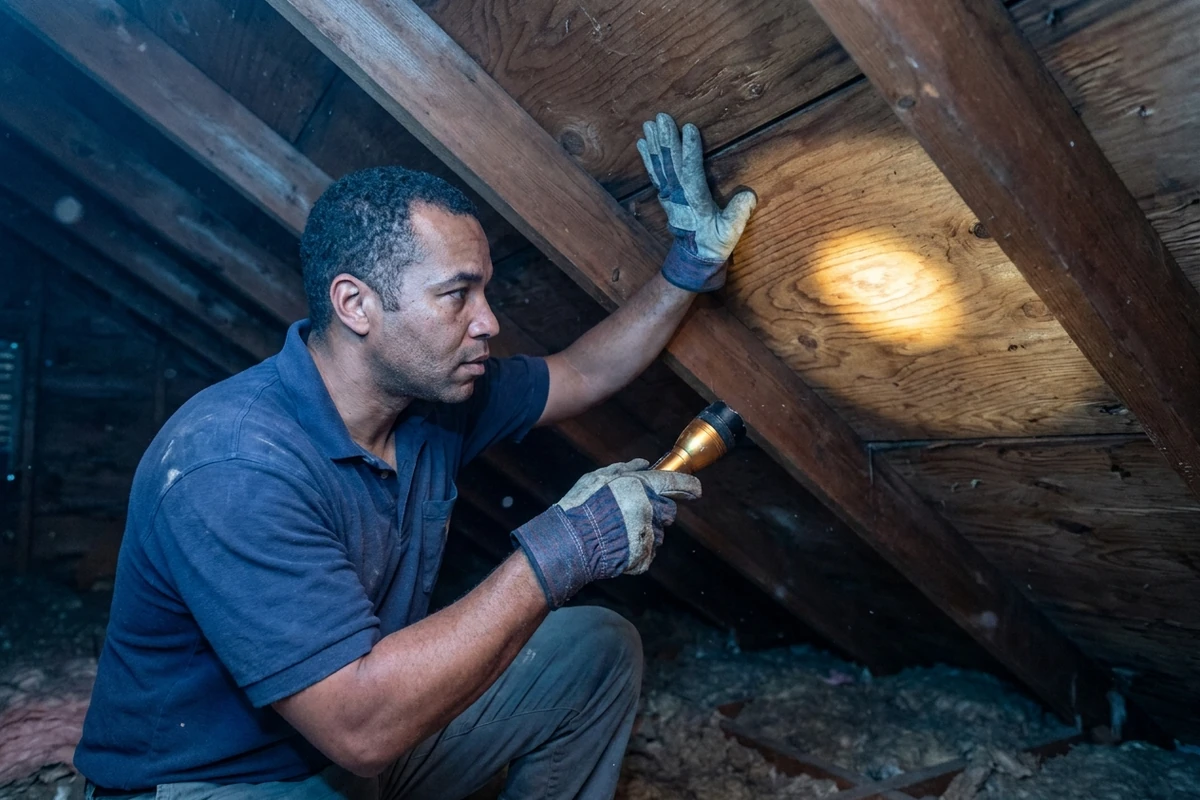
A free CRS inspection checks your layer count, shingle condition, and deck from the attic, then gives you a written report on both options with the numbers attached.
The Fastening Detail That Makes or Breaks an Overlay
If you do go with an overlay, one detail matters more than any other: the nails have to reach the decking, not stop in the old shingle layer. A fastener that lands only in the spongy old shingles provides far less holding power, and in NJ’s coastal and near-coastal wind zones that is a real structural concern, not a formality.
On a permitted job (a multi-unit building, for example), the municipal inspector checks exactly this. On a standard residential overlay, which needs no permit, it falls to you and your contractor to get it right, which is one more reason an overlay should be done by a crew that documents its work. The fastening and code requirements are published by the NJ Division of Codes and Standards and the NRCA; manufacturer requirements for warranty coverage are published by makers such as GAF.
CRS recommends a tear-off in nearly every case, because full deck visibility is the only way to warranty what we build on. When the conditions for an overlay are genuinely met and a homeowner requests one, we price it with a written explanation of the trade-offs, so the decision is made with numbers attached. See our roof replacement service and the cost guide for how scope and price come together.
Roof replacement service · what a roof inspection includes · What voids a roof warranty · Monmouth County cost
Last updated September 16, 2026. Written by the Certified Roofing Specialists Inc. team, licensed New Jersey roofing contractors serving Monmouth, Ocean, Middlesex, Somerset, and Union Counties. Cost and lifespan figures are 2026 estimates, not quotes.
Common questions
Frequently Asked Questions
Can you put a new roof over an old one in NJ?
Yes, over one existing layer, if the shingles lie flat and the deck is sound. NJ code allows a maximum of two shingle layers, so if two are already present, a full tear-off is required. A standard one- or two-family overlay or tear-off is ordinary maintenance and needs no permit.
Is a roof-over cheaper than a tear-off in NJ?
Up front, yes. An overlay on an 1,800 sq ft home runs about $8,500 to $13,000 versus $12,000 to $18,000 for a tear-off, mostly the saved disposal and labor. But it hides the deck, shortens shingle life, and often voids the manufacturer warranty, so the next replacement costs more.
Does a roof-over void the shingle warranty?
Often, yes. Most major manufacturers (GAF, CertainTeed, Owens Corning) require installation over bare decking for full warranty coverage and exclude or limit overlay installations. If keeping the manufacturer warranty matters to you, a full tear-off over a clean deck is the safer choice.
-

Do You Need a Permit to Replace a Roof in NJ?
Roof replacement permit NJ: a standard one or two-family re-roof needs no permit. Here is when you do…
-
What Separates Great NJ Roofers From the Rest
What separates great NJ roofing contractors from the rest: licensing, real crews, honest inspections, and the details that…
-
Roof Replacement Cost in Middlesex County NJ (2026)
Roof replacement cost Middlesex County NJ: 2026 price ranges by home size for Edison, Woodbridge, and Old Bridge,…