Roof Damage From Falling Branches in NJ: What to Do First
Roof damage from falling branches NJ storms cause is usually worse than it looks from the driveway. Leave the limb where it landed, photograph it from the ground, and have the impact points inspected. A branch that only scuffed the surface and one that split the decking look nearly identical from below.
November is when this starts in New Jersey. The leaves are still on the oaks and maples through the first half of the month, a nor’easter loads those leaves with rain or wet snow, and limbs that carried a summer of wind come down in one night. By the time the wind drops, half the calls we get are from homeowners standing on a wet lawn looking up at something across their roof.
This guide covers the five kinds of damage a limb actually does, what to do in the first day, how to tell a cosmetic scuff from a real puncture, how the insurance side works in New Jersey, and how to get ahead of it before the next storm. If the roof is open and water is coming in tonight, that is an emergency roofing situation in NJ and it is handled differently.
What Kind of Roof Damage From Falling Branches NJ Storms Actually Cause?
Falling branches cause five patterns of roof damage: a puncture strike, a deflection strike along a line of shingles, an edge and gutter hit, a limb left resting on the slope, and overhang abrasion from a branch that never fell. Urgency runs from a same-day tarp for a puncture to a planned trim for abrasion.
| What hit the roof | What you can see | What it did underneath | How urgent |
|---|---|---|---|
| Puncture strike A short thick stub landing point first | A dark hole or a torn shingle with the edges pushed inward | Broke the shingle, the underlayment and often the sheathing. Open water path. | Same day. Tarp now. |
| Deflection strike A long limb landing flat | A bruised line of shingles with granules stripped off | Cracked shingle mats and loosened fasteners along the line of impact | Inspect within a week |
| Edge and gutter hit A limb sliding off the eave | Bent gutter, pulled-away drip edge, torn fascia | Water now runs behind the gutter into the fascia and soffit | Before the first freeze |
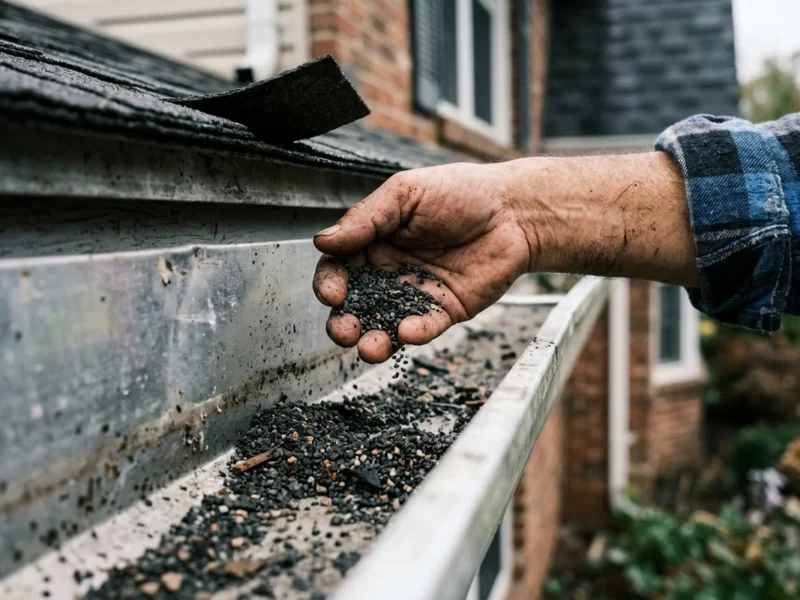
| Resting limb A branch that landed and stayed | A branch lying across a slope, apparently doing nothing | Grinds granules away with every gust and dams debris and snowmelt above it | Remove within days |
| Overhang abrasion A limb that never fell | A bald patch of shingle under a branch, no impact mark anywhere | Years of wear concentrated on one small area, no sudden event to claim | Plan the trim, not a repair |
The row worth arguing about is the resting limb. It is the one homeowners consistently downgrade, because nothing looks broken. A branch that sits on a north slope through a New Jersey winter sheds granules onto the shingles every time the wind moves it, and it holds a wet pile of leaves above it that never dries.
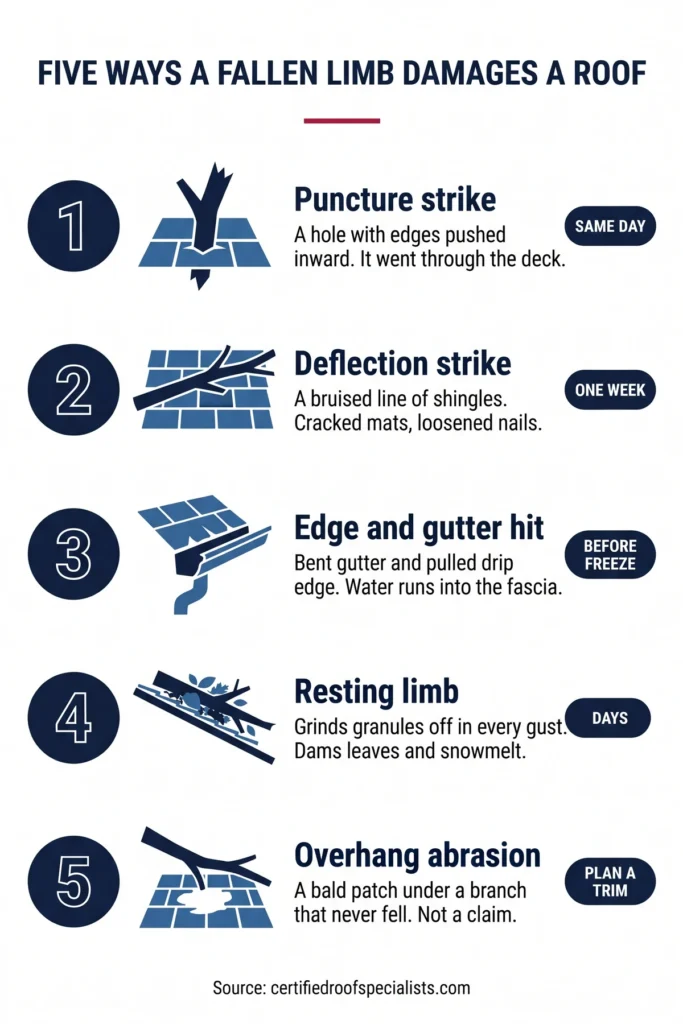
Embed this infographic on your site
Copy the code below to share this infographic with a link back to this guide.
<p><a href="https://certifiedroofspecialists.com/roof-damage-from-falling-branches-nj/"><img src="https://certifiedroofspecialists.com/wp-content/uploads/2026/10/roof-damage-from-falling-branches-nj-infographic.webp" alt="roof damage from falling branches NJ: five types of limb damage and how urgent each one is" style="max-width:100%;"></a></p>
<p>Source: <a href="https://certifiedroofspecialists.com">Certified Roofing Specialists</a></p>
What Should You Do in the First 24 Hours?
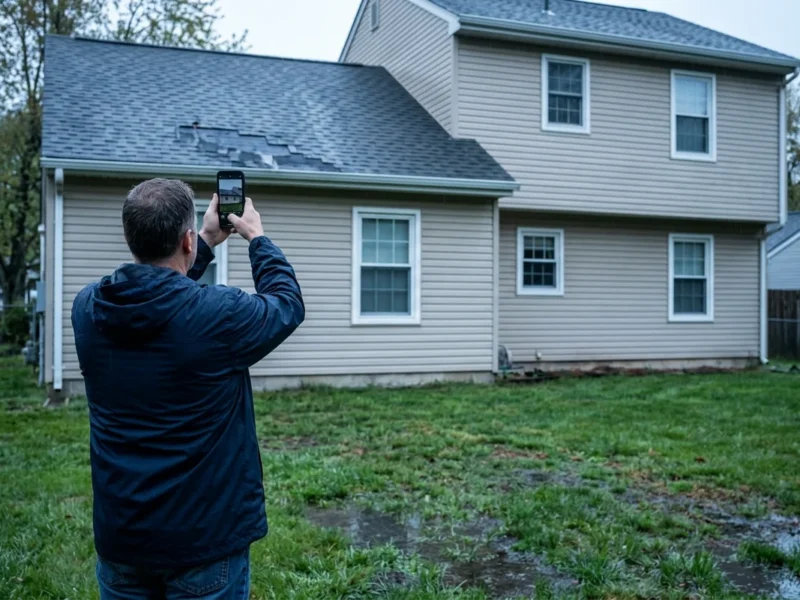
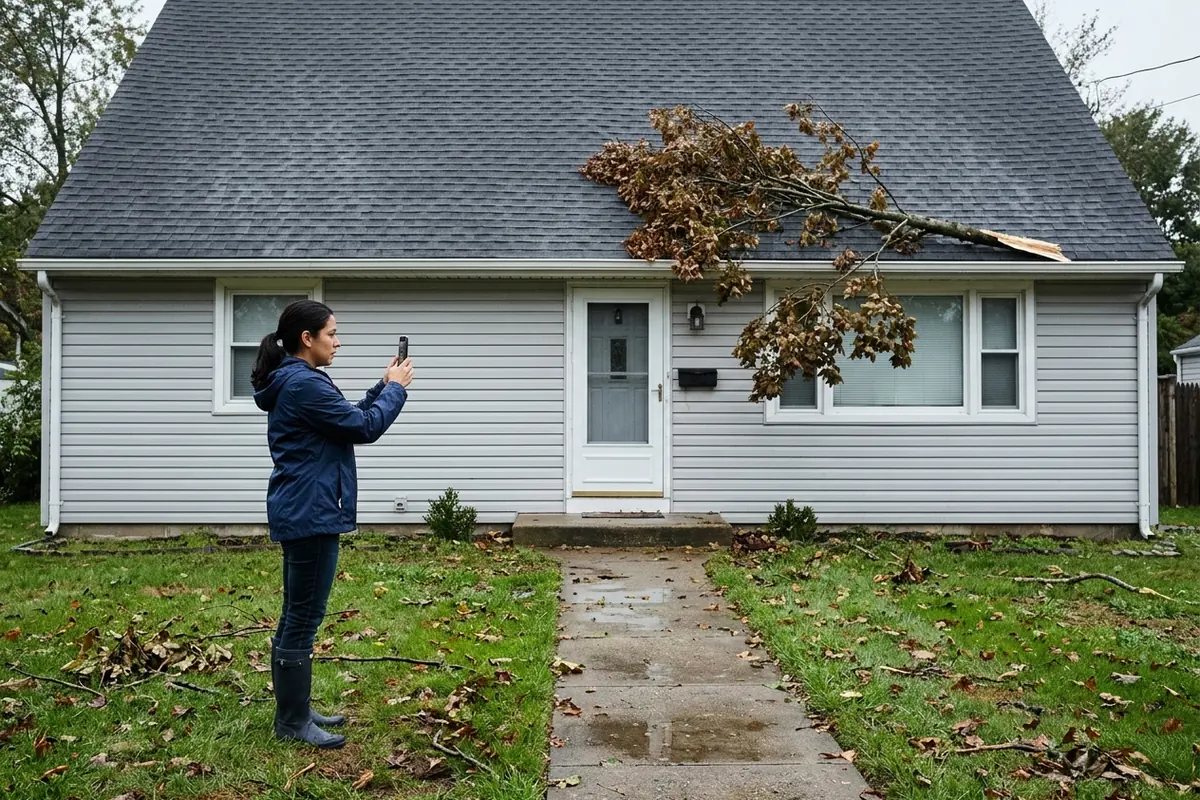
In the first 24 hours, leave the limb where it is, photograph it from the ground, and look at the attic underside with a flashlight, all without going on the roof. Pulling a limb down rakes granules off the slope and can drag loose shingles with it. Wide photos from four corners carry the most weight with a carrier.
- Leave the limb where it is. Pulling it down from a ladder rakes granules off the whole slope on the way and can drag loose shingles with it. It is also how people fall.
- Photograph it from the ground, from four corners. Wide shots that show the house, the tree, and the limb together carry more weight with a carrier than close-ups with no context.
- Go into the attic with a flashlight. Look at the underside of the sheathing directly below the impact. Daylight, a wet stain, or a split in the plywood tells you the strike went through.
- Move what is under the ceiling. If there is any wet spot forming inside, clear the room before you call anyone.
- Call for an inspection, and say the word branch. It changes how the visit is scheduled and what the crew brings.
A proper visit covers every impact point rather than the one you pointed at, which is part of what a roof inspection in NJ should include. For live storm timing across the state, the National Weather Service office in Mount Holly is the source we watch.
How Do You Tell a Scuff From a Real Puncture?
From the ground, you often cannot tell, and that is the honest answer. A shingle that lost its granules and a shingle that cracked through its fiberglass mat look the same from forty feet down. Three checks separate them: the attic underside, the shingle mat flexed by hand, and the fastener line.
First, the attic. A puncture that reached the sheathing usually shows from underneath as a split, a bright line of daylight, or a damp ring around a nail. Second, the shingle mat, which a roofer flexes by hand: a bruised shingle feels soft and gives, an intact one does not. Third, the fastener line, because a limb landing across a course often backs nails out an eighth of an inch without breaking anything visible, and those shingles lift in the next wind.
The hidden half of roof damage from falling branches NJ crews look for
The strike point gets the attention. The damage that costs money is usually a few feet away. A limb hitting mid-slope pushes force downhill through the shingle courses, so the cracked mats show up below the impact rather than at it. A limb that slid off over the eave usually took the drip edge with it, and a missing drip edge sends every rain after that behind the gutter and into the fascia.
If the roof was already near the end of its service life, a limb strike is often the event that ends the argument. Our guide to choosing between roof repair and replacement lays out the test we use, and NJ roof replacement cost ranges give you the other half of it. We do not publish a flat price for limb-strike repair, because the same phrase covers one shingle and a full deck section.
Does Insurance Cover Roof Damage From Falling Branches NJ Homeowners Report?
Usually yes, because a falling limb is a sudden accidental event rather than wear. That is the distinction carriers apply, and it is why the resting-limb and overhang-abrasion rows in the table above are treated so differently from the puncture row. Abrasion under a branch that never fell reads as maintenance, and maintenance is not a covered peril.
Certified Roofing Specialists documents roof condition with photographs, measurements and a written report. We do not file, negotiate, or settle insurance claims on your behalf, because that stays your role as the policyholder. Coverage questions belong with your carrier or the NJ Department of Banking and Insurance.
If the roof already had years on it, expect the age question. Carriers handle an older roof differently, sometimes on actual cash value rather than replacement cost, which we cover in filing an insurance claim on an older NJ roof.
Find out what the branch actually did before winter sets in
A limb strike can look like a scuff from the ground and still have split the decking underneath, so a CRS inspector goes up, photographs every impact point, and tells you in writing what is damaged and what is not.
How Do You Keep Branches Off the Roof Before Winter?
The working rule roofers use is a clear ten feet of air between the roof surface and the nearest branch. That distance is not about the branch falling. It is about the branch reaching the roof in a wind, which it can do from much farther away than people expect once a limb is loaded with wet snow and bending.
- Trim before the leaves are gone, not after. An arborist reading a canopy in early November can still see which limbs are dead, because they are the ones that dropped their leaves first.
- Watch the north and northeast slopes. They dry slowest, they hold moss, and they sit downwind of a nor’easter.
- Clear the gutters after the drop, not during it. A gutter packed with oak leaves in December backs water up under the shingle edge, and that is where ice starts.
- Hire the tree work and the roof work as two trades. A tree crew that offers to patch the roof it just cleared is outside its lane, and in New Jersey any home improvement contractor doing that work needs a registration you can verify.
Verify any contractor’s New Jersey Home Improvement Contractor registration at the NJ Division of Consumer Affairs before work starts. The rest of the pre-winter list is in our fall roof prep guide for NJ homes.
On permits, one point that saves arguments: repairing the roof covering on a detached one- or two-family New Jersey home is ordinary maintenance and does not require a building permit. Replacing sheathing under a puncture is structural work and does, and condominium, multi-family and attached-community buildings require one either way. Confirm the current requirement with your local construction office. No permit never means no code, and the repair still has to meet it.
Storm damage roof inspection in NJ · Emergency roofing in NJ · Fall roof prep checklist · Roof repair services
Last updated November 2, 2026. Written by the Certified Roofing Specialists team, registered New Jersey home improvement contractors, NJ HIC registration #13VH14243900, serving Monmouth, Ocean, Middlesex, Somerset, and Union Counties. Call (201) 841-3858.
Common questions
Frequently Asked Questions
Should I pull the branch off my roof myself?
No. A limb resting on shingles is holding its own weight and often some of the roof’s. Dragging it down rakes granules off an entire slope and can pull loose the shingles it snagged. Leave it, photograph it from the ground, and let the crew lift it clear.
Who removes the tree, a roofer or a tree service?
A tree service removes the tree and cuts the limb into manageable pieces. A roofer repairs the roof underneath. On a large strike the two are scheduled together, tree crew first. Certified Roofing Specialists coordinates the sequence so the roof is not opened up and left waiting.
My neighbor's tree fell on my roof. Whose insurance pays?
In most New Jersey cases your own homeowners policy responds, regardless of which yard the tree grew in. Fault only enters the picture if the tree was already dead and the owner was warned. Ask your carrier directly and get the answer in writing.
Can a small branch really damage a roof?
Yes, in two ways. A short sharp stub can punch through a shingle and into the sheathing on impact. A light branch that stays put grinds granules away every time the wind moves it, so a single winter of contact can age one section of roof considerably.
-

Insurance Claim for an Old Roof in NJ: What to Know
Insurance claim for an old roof in NJ: how age cuts your payout, ACV vs RCV explained, what…
-
Does Homeowners Insurance Cover Roof Replacement in NJ?
Does insurance cover roof replacement in NJ? Usually only storm damage, not age. See what is covered, ACV…
-
Hail Damage Roof NJ: How to Spot It and What to Do
Hail damage roof NJ: how to spot it from the ground, what size hail actually harms shingles, whether…