Hail Damage Roof NJ: How to Spot It and What to Do
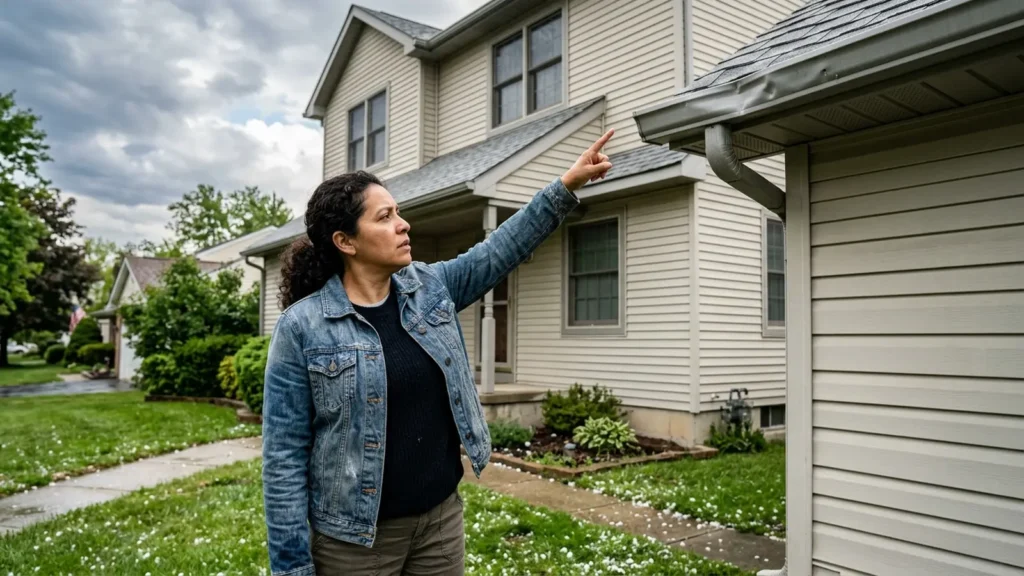
A hail damage roof NJ inspection starts from the ground. To check for hail damage to a roof in NJ, start from the ground: dented aluminum gutters, downspouts, vent caps, and the AC unit casing tell you the storm hit hard enough to matter. Shingle damage (bruising and granule loss) usually is not visible from the street and needs a professional inspection. Call a licensed roofer for a written report before you call your insurer, and photograph everything first.
New Jersey sees multiple hail events in an active summer. Most produce hail under an inch that dents gutters but leaves shingles largely intact. A few produce larger stones that bruise the shingle mat and shorten the roof’s remaining life. Knowing which category your storm fell into decides whether you file a claim, schedule a repair, or document and monitor.
Hail Damage Roof NJ: How to Spot It
Hail damage to a roof in NJ shows up in two places: the soft metal you can see from the ground, and the shingle field you cannot. The ground signs confirm a hail event reached your property with real force. The shingle signs decide whether your roof lost service life.
| Visible from the ground | Needs a professional on the roof |
|---|---|
| Dented aluminum gutters and downspouts | Bruising that breaks the granule bond on the shingle mat |
| Dents on vent caps, chimney caps, and the AC line cover | Granule loss across the shingle field |
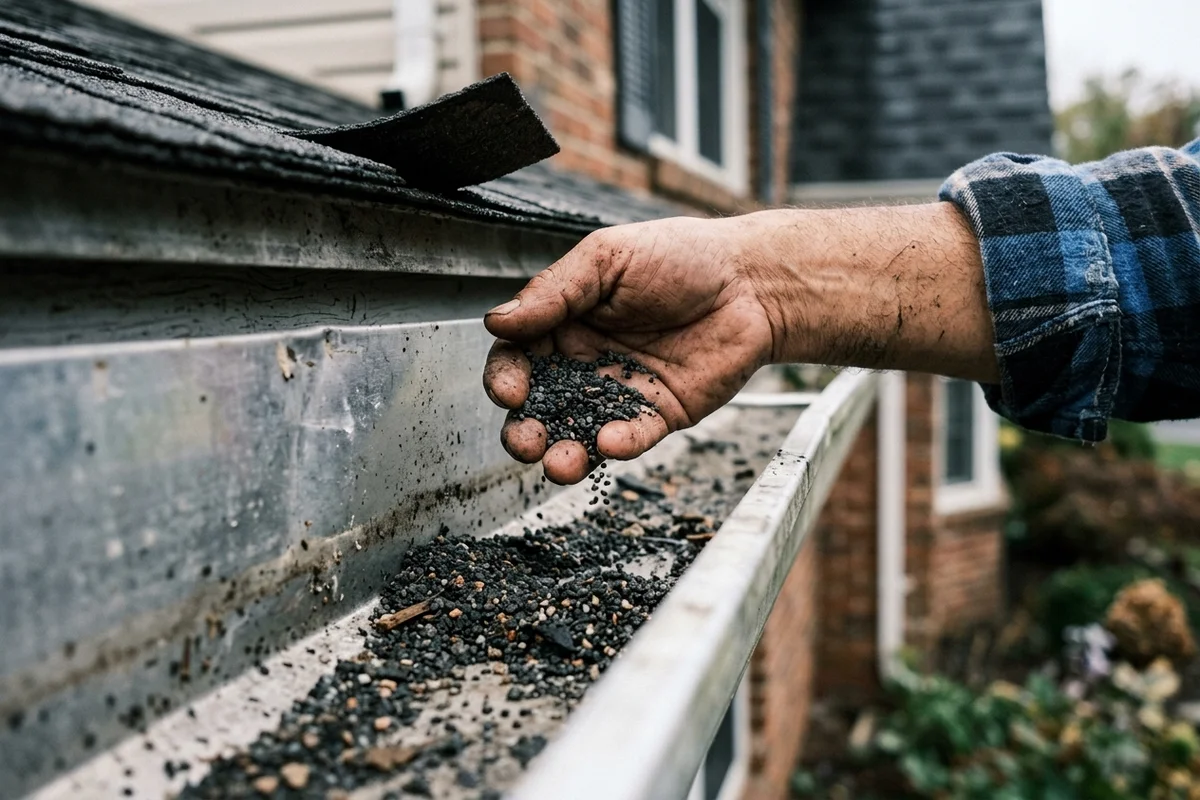
| A gutter full of granules after the storm | Cracked or fractured shingle tabs |
| Divot marks on a wood fence, deck, or mailbox post | Soft-metal flashing dented at chimneys and walls |
| Dents on the AC condenser fins | Impact marks on skylight and pipe-boot seals |
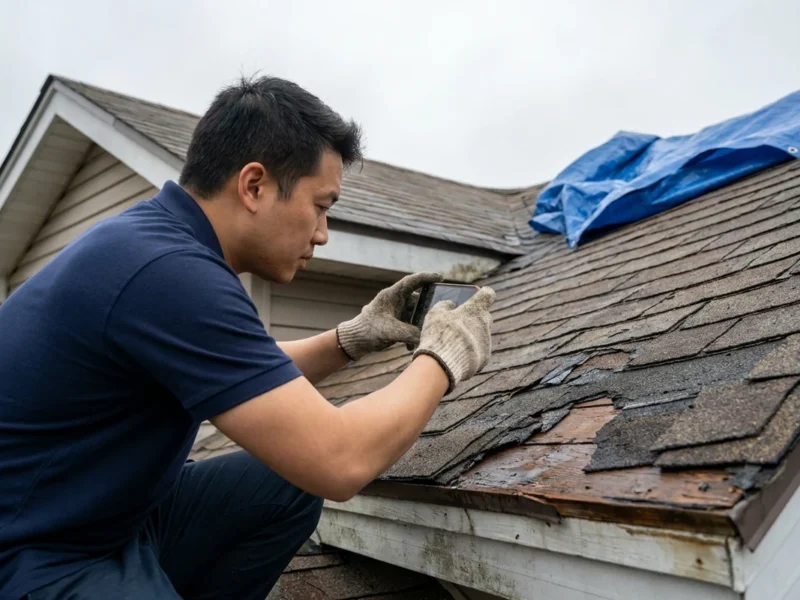
If the soft metal is dented, assume the shingles took the same impact and get a roof-level inspection. Do not climb up yourself; wet or hail-struck shingles are a slip hazard, and walking the roof can create damage that was not there before.
What Size Hail Causes Roof Damage in NJ
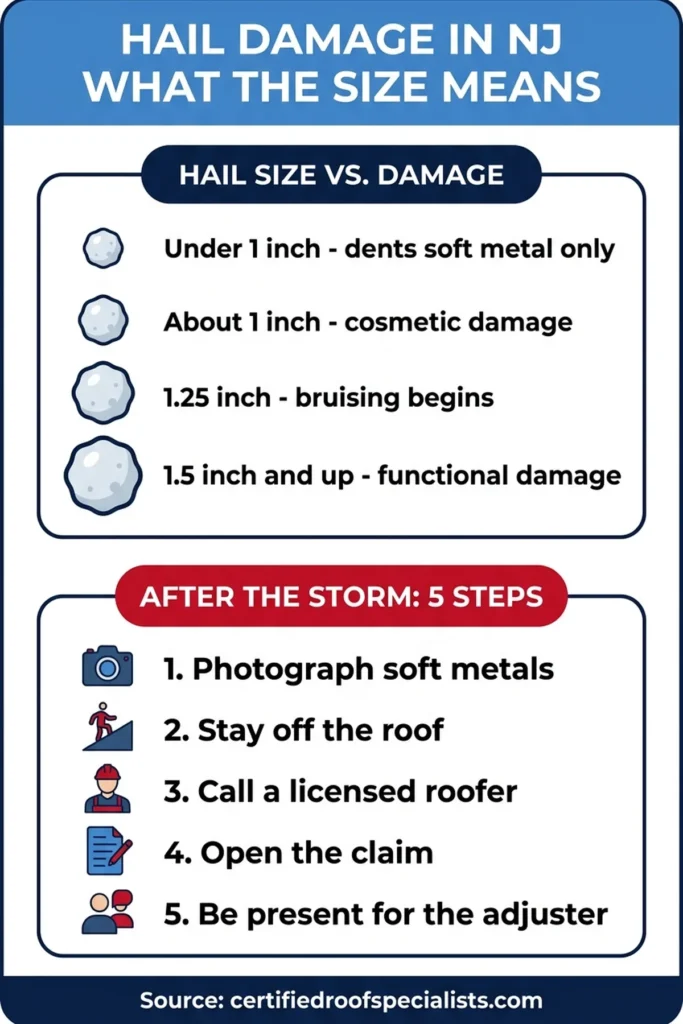
Hail size is the single best predictor of whether your shingles lost service life. NJ hail is commonly 0.75 to 1.25 inch, occasionally larger. The threshold for functional damage on asphalt shingles is roughly an inch and a half.
| Hail size | What it does | What to do |
|---|---|---|
| Under 1 inch | Dents soft metals; shingles usually unaffected | Photograph the metal, monitor; a claim is unlikely |
| About 1 inch | Cosmetic marks on shingles; clear metal denting | Document and get an inspection to rule out bruising |
| About 1.25 inch | Bruising begins, especially on aged or brittle shingles | Inspect; expect possible granule loss |
| 1.5 inch and up | Breaks the granule bond; functional damage that shortens roof life | Inspect and open a claim promptly |
Older shingles bruise at smaller hail sizes because the asphalt has already lost flexibility to NJ’s freeze-thaw cycles. A 1-inch stone that would only mark a new roof can crack a 16-year-old one. You can confirm whether a qualifying hail event hit your address through the National Weather Service storm records, and the Insurance Institute for Business & Home Safety documents how hail fractures the shingle mat below the surface.
Does Insurance Cover Hail Damage to a Roof in NJ?
Most NJ homeowners policies cover hail as a named peril, but the settlement depends on three things: roof age, whether your policy pays replacement cost or actual cash value, and your proof that a specific storm caused the damage.
Replacement cost vs actual cash value. A replacement-cost (RCV) policy pays to replace the damaged roof at today’s prices. An actual-cash-value (ACV) policy pays the depreciated value, which on a roof over 15 to 20 years old can be a fraction of replacement. Many NJ policies shift older roofs to ACV automatically, so read your declarations page before you assume full coverage.
Causation and timing. Adjusters must tie the damage to a dated storm event. The longer you wait, the harder that link is to prove, so document and file promptly. The NJ Department of Banking and Insurance publishes consumer guidance on homeowners claims. CRS provides the written documentation your insurer can work from, but does not file, negotiate, or settle the claim on your behalf.
Get hail damage documented before your adjuster visits
A licensed CRS roofer inspects the full roof, photographs every finding, and gives you a written report you can hand to your insurer. The residential inspection is free.
After a Hail Event: What to Do in Order
- Within 24 to 48 hours, photograph the soft metal. Walk the perimeter and shoot the gutters, downspouts, vent and chimney caps, and the AC casing. These images establish that the storm reached your home with impact force.
- Stay off the roof. Hail-struck shingles are slick and brittle; climbing up risks injury and can add damage that complicates the claim.
- Call a licensed NJ roofer for a written inspection before you contact your insurer. The report creates a pre-adjuster baseline of the damage.
- If damage is confirmed, open the claim. Give your insurer the inspection report, the photos, and the storm date.
- Be present for the adjuster’s visit when you can, and hand over the contractor’s written findings so nothing gets missed in a quick walkthrough.
If a hailstorm left an active leak or exposed decking, CRS provides emergency tarping for qualifying situations across all five service counties. See our roof repair and emergency service, and for the coverage side, our FAQ on documenting storm damage for a claim. The central NJ summer hail corridor runs through Freehold, western Howell, and parts of Marlboro in Monmouth County.
Roof repair and emergency service · documenting storm damage for a claim · 8 signs you need a new roof · Freehold roofing
This content is educational. Certified Roofing Specialists Inc. is a licensed NJ roofing contractor and Home Improvement Contractor, not an insurance professional; for coverage questions, speak with your agent or a licensed NJ public adjuster. Last updated July 22, 2026. Serving Monmouth, Ocean, Middlesex, Somerset, and Union Counties.
Common questions
Frequently Asked Questions
Should I call my insurance company or a roofer first after hail in NJ?
Call a licensed NJ roofing contractor first. A contractor inspection produces a written condition report that documents the damage before the adjuster arrives, which protects your claim. Adjusters work quickly, and a roofer who was there first can point out impact damage a brief walkthrough might miss. CRS documents the damage but does not file the claim.
What size hail causes roof damage in NJ?
Hail around an inch usually leaves cosmetic marks on asphalt shingles and dents soft metal. Larger stones, roughly 1.5 inch and up, break the granule bond and cause functional damage that shortens shingle life. Stones under an inch typically dent gutters and vents without harming the shingle field. A professional inspection confirms which happened.
Does homeowners insurance cover hail damage to a roof in NJ?
Most NJ policies cover hail as a named peril, but the payout depends on roof age, policy type, and proof of causation. Roofs over 15 to 20 years old may be settled at actual cash value (depreciated) rather than full replacement cost. Photograph all damage before any repairs and before the adjuster visits.
-

Emergency Roofing in NJ: Storm Damage Response
Emergency roofing NJ: what to do after storm damage, how fast to get a tarp on, what it…
-
Community Association Roofing in NJ: A Property Manager’s Guide
Community association roofing NJ: a property manager guide to multi-building bids, board-ready scopes, reserve-study documentation, and scheduling.
-
Insurance Claim for an Old Roof in NJ: What to Know
Insurance claim for an old roof in NJ: how age cuts your payout, ACV vs RCV explained, what…