
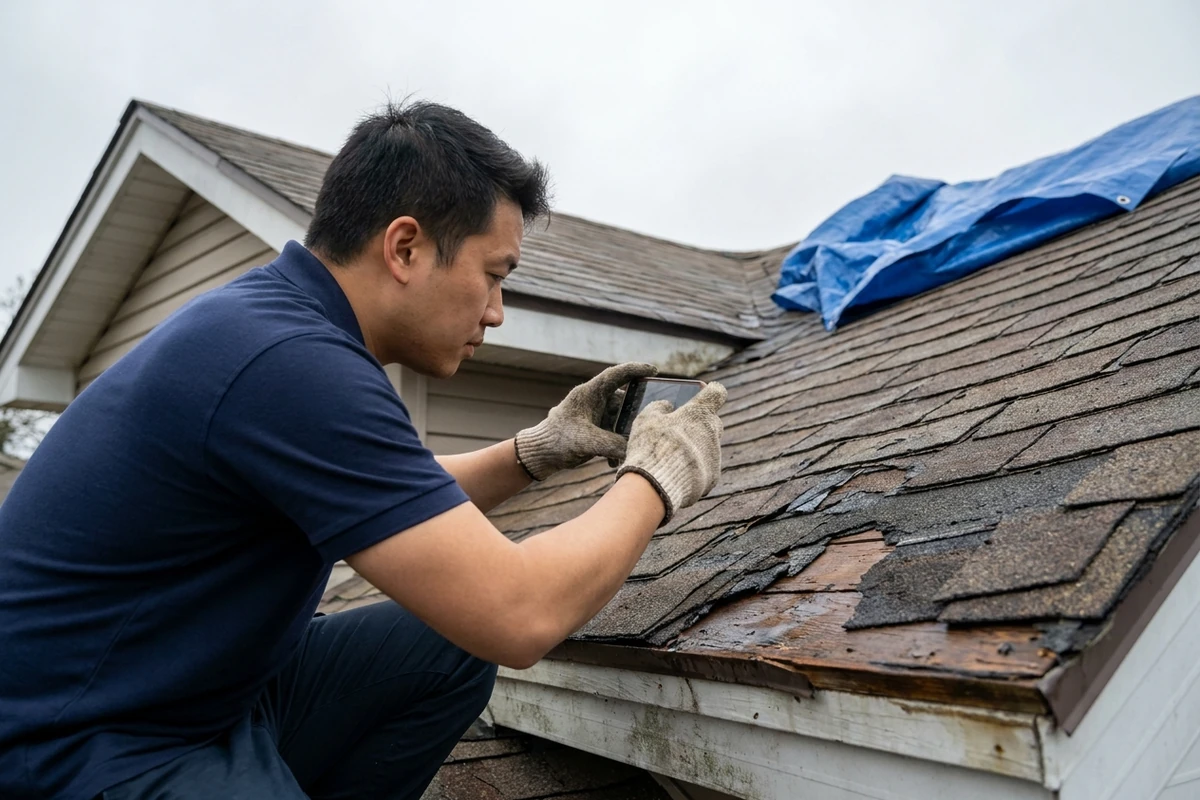
Emergency Roofing in NJ: Storm Damage Response
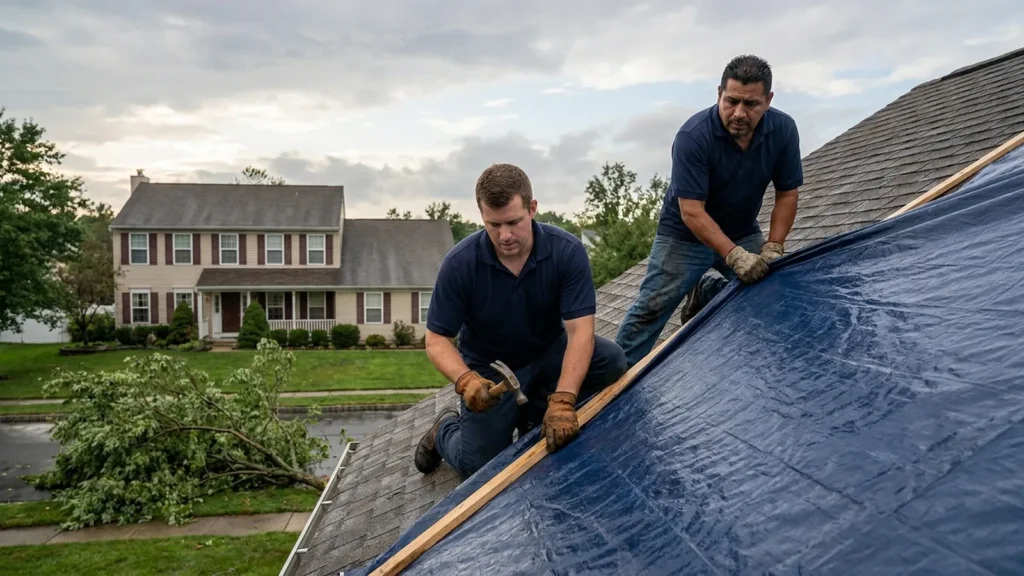
Emergency roofing NJ is a response to specific conditions, not a marketing promise. Emergency roofing in NJ is a specific response to specific conditions, not a promise that a crew arrives in two hours regardless of storm volume. What CRS provides after a storm or sudden failure is a documented assessment, temporary protection installed correctly, and a written report your insurance adjuster can use. If a contractor promises same-day permanent repair after a major storm, read the fine print before you sign anything.
If you have active water entry or an open section of roof, contact us right away. Below is what qualifies as an emergency, what our response includes, and how to protect yourself from the contractors who follow storms into New Jersey.
Emergency Roofing NJ: What Qualifies
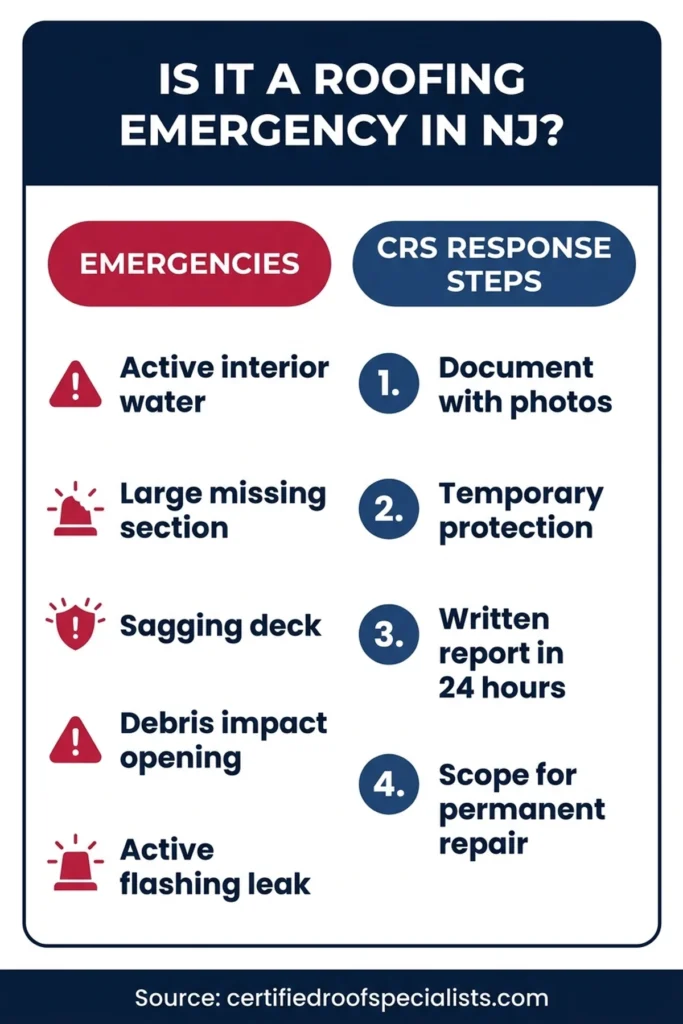
Not every roof problem needs an emergency call. These five do:
- Active interior water entry. Spreading ceiling stains or an active drip mean water has already breached the system. Highest priority.
- A large missing section of roofing. Wind regularly strips runs of shingles; exposed decking larger than a few square feet is an immediate vulnerability.
- Structural compromise visible from inside. A sagging deck or rafters after a storm needs assessment before the next rainfall.
- Debris impact creating open exposure. A limb that cracks sheathing opens a water path; removing the limb without patching is incomplete.
- A confirmed active leak at a flashing transition. Chimney, skylight, and pipe-boot flashings fail under high wind and heavy rain.
What usually does not need an emergency call: minor granule loss, superficial cracks with no confirmed penetration, or a single lifted tab with no leak. Those warrant a documented storm damage roof inspection, which matters, but does not need to happen at midnight.
What CRS Emergency Response Includes
Every emergency response runs in this order:
- Documented assessment with photos before any work. The pre-work record establishes condition at the time of response. Your insurance claim file starts here, and it is your reference if an adjuster later disputes the extent of damage.
- Temporary protection matched to the damage. Tarping for open sections, emergency patching for localized penetrations, or sealing at failed flashings. The method depends on what we find.
- Written condition report within 24 hours. Damage by zone, photos, and what was installed as temporary protection. Many homeowners get nothing in writing from the first contractor on site, which causes problems later.
- A clear scope for permanent work. Once a full assessment is possible, we define and price the permanent repair or replacement in writing, separate from the emergency response.
Response time. In normal weather, CRS targets an assessment within 24 to 48 hours across Monmouth, Ocean, Middlesex, Somerset, and Union Counties. After a widespread nor’easter, severe thunderstorm line, or tropical system, timing extends with volume, and active interior water entry is prioritized. When you call, tell us whether you have an active drip, the approximate damage location, and whether debris has hit the roof. You can confirm a dated storm event through the National Weather Service.
Temporary vs Permanent Repairs
Temporary protection stops active water entry. It is never represented as a permanent repair. A properly installed tarp or patch holds 30 to 90 days depending on damage, method, and season, which buys time to complete a full assessment, agree on scope, and schedule permanent work under non-emergency conditions.
Homeowners sometimes assume the temporary work is the last step. It is not. Follow up within two to three weeks to confirm the permanent scope and schedule, before the temporary protection weathers out and you are back where you started.
Active leak? Get it covered and documented today
Call CRS for the fastest response. We document the damage, install correct temporary protection, and deliver a written report your insurer can use. The residential assessment is free.
Storm Chasers: Know What You Are Signing
After major NJ storms, out-of-state contractors arrive with aggressive door-to-door pitches. Some are legitimate. Before you sign with anyone, including CRS, verify these four things:
- NJ HIC license number. Every home-improvement contractor in NJ must carry one. Ask for the number and verify it at NJ Consumer Affairs before signing.
- Pressure to sign on the spot. A real estimate holds. Walk away from anyone who says the price expires today.
- “We will handle your insurance claim.” A roofer can document damage and provide estimates, but cannot legally represent you in an insurance negotiation without a public adjuster license. And a “we will pay your deductible” offer is illegal in NJ, a clear warning sign.
- Large upfront deposits. A materials deposit is standard; a demand for 50 percent or more before any work begins on a storm job is not.
For coverage specifics after a storm, see our hail damage roof FAQ and the old-roof insurance claim guide, and the NJ Department of Banking and Insurance for your rights as a policyholder.
If you have potential storm damage but no active leak, a free Roof Risk Assessment is the right starting point. CRS documents what we find, tells you what needs immediate attention and what can wait, and delivers it in writing at no charge with no obligation.
Roof repair service · Storm damage roof inspection · Hail damage roof FAQ · Old-roof insurance claim
Last updated October 14, 2026. Certified Roofing Specialists Inc. is a licensed New Jersey roofing contractor and Home Improvement Contractor, providing emergency roofing response across Monmouth, Ocean, Middlesex, Somerset, and Union Counties. CRS documents damage for your claim but does not file, negotiate, or settle insurance claims on your behalf.
Common questions
Frequently Asked Questions
What counts as a roofing emergency in NJ?
Active interior water entry, a large missing section of shingles or roofing with exposed decking, a sagging deck or rafters visible from the attic, debris impact that opens the roof, or a confirmed active leak at a flashing point. Minor granule loss or a single lifted tab with no leak is not an emergency.
How fast can a roofer respond to a storm in NJ?
In normal weather, CRS targets an assessment within 24 to 48 hours across its service counties. After a widespread storm, response timing extends with volume, and active interior water entry is prioritized over surface or cosmetic damage. Be wary of any contractor promising same-day permanent repairs after a major storm.
How long does an emergency tarp last?
A properly installed tarp or emergency patch holds roughly 30 to 90 days depending on the damage, method, and weather. It stops active water entry but is not a permanent repair. Follow up within two to three weeks to confirm the permanent scope before the temporary protection weathers out.
-

Community Association Roofing in NJ: A Property Manager’s Guide
Community association roofing NJ: a property manager guide to multi-building bids, board-ready scopes, reserve-study documentation, and scheduling.
-
Insurance Claim for an Old Roof in NJ: What to Know
Insurance claim for an old roof in NJ: how age cuts your payout, ACV vs RCV explained, what…
-
Roof Protection Plan vs Home Warranty: What NJ Homeowners Need to Know
Roof protection plan vs home warranty NJ: what each actually covers, where home warranties fall short on roofs,…