Roof Repair or Replace in NJ: A Practical Decision Guide
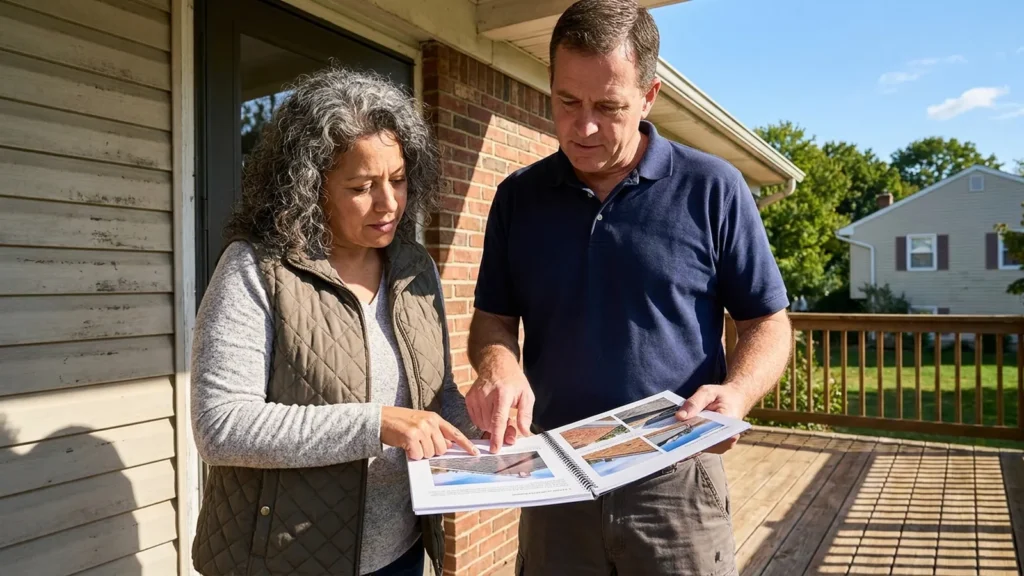
Roof leak repair NJ decisions start with finding the real source of the water. Deciding whether to repair or replace your roof in NJ comes down to four questions: how old is the roof, is the damage isolated or widespread, has it been repaired before, and is the decking sound. Before you accept a “you need a new roof,” get a written inspection with photos. This guide walks through the four questions, the cost math, and what a credible recommendation actually looks like.
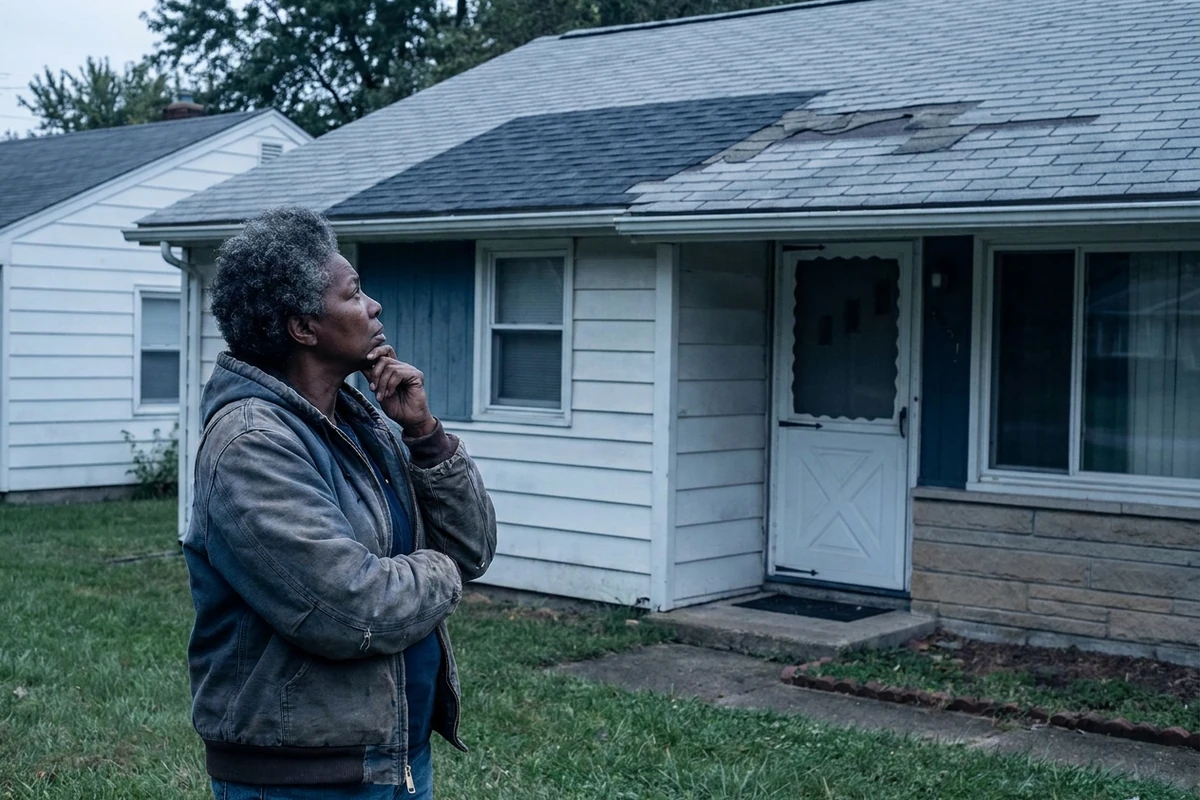
Your NJ roofer just told you that you need a new roof. Before you sign anything, you need to know whether that is actually true, or whether a repair will serve you just as well. This is not a knock on contractors, most are legitimate, but “you need a new roof” is also the highest-value thing a roofing contractor can say. The only protection you have is information: specifically, answers to four questions.
The Information-Asymmetry Problem
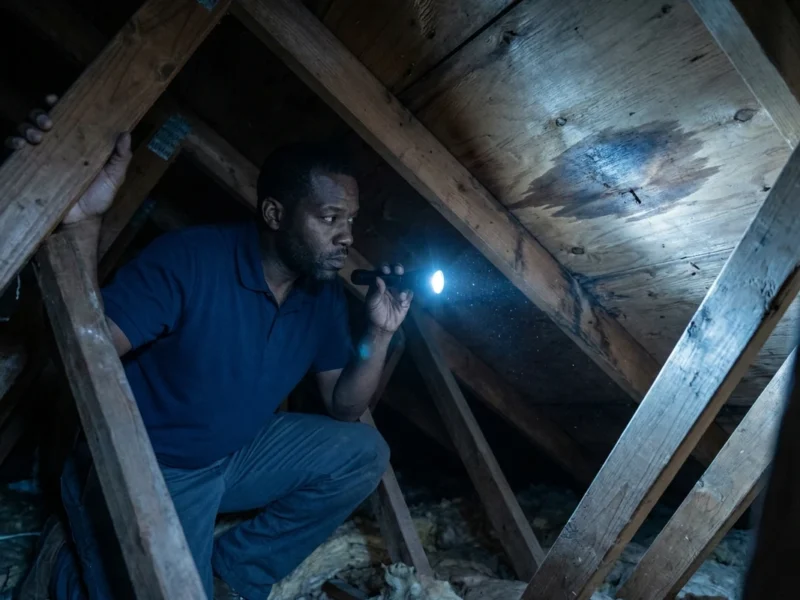
You do not get on your roof. Your contractor does. That gap is where bad decisions happen. When a roofer tells you verbally that you need a full replacement, you have no way to verify it: you did not see what they saw, and you do not know if the damage covers 10 percent of the roof or 80 percent.
The solution is simple: require a written inspection report with photos. A contractor who recommends replacement should be able to show you, in writing and with images, the specific conditions that support that recommendation. If they cannot, that is a reason to get a second opinion before spending $15,000. This is not about distrust; it is about deciding with actual information.
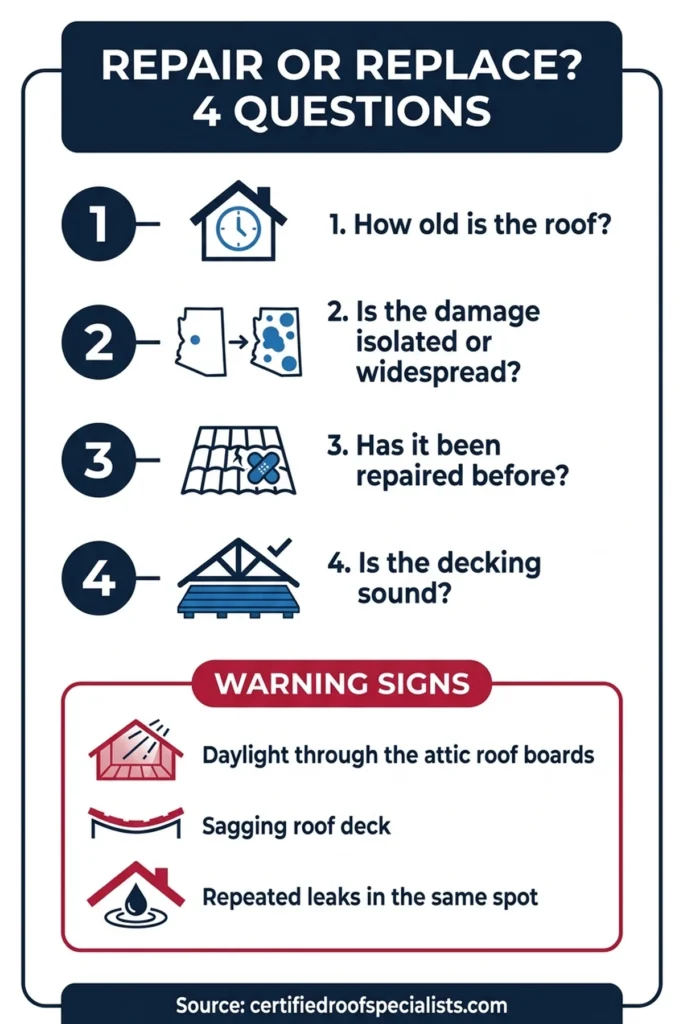
Roof Leak Repair NJ: Four Questions That Decide
1. How old is the roof?
Roof age is the single most important factor.
- Under 10 years: Repair. An 8-year-old roof with one leaking pipe boot needs a $300 repair, not a $16,000 replacement.
- 10-20 years: Depends on condition, the gray zone where a thorough inspection matters most. One section of wind damage on an otherwise sound 15-year-old roof is worth repairing; a 17-year-old roof with granule loss across multiple slopes and a repair history is trending toward replacement.
- 20+ years: Lean strongly toward replacement. Asphalt is designed for 25 to 30 years, but NJ’s climate (freeze-thaw cycles, summer heat, nor’easters) often shortens that in practice.
- 25+ years: Replace, almost without exception. Repair money is better put toward the replacement you will need within 2 to 5 years anyway.
2. Is the damage isolated or widespread?
One leak from one failed pipe boot is different from three leaks in three locations. An isolated failure (a single section of blown-off shingles, a corroded flashing at one chimney) can often be repaired without touching the rest of the roof. When damage appears in multiple unrelated locations at once, the roof is failing as a system, and patches address the symptom in one place while the condition develops everywhere else.
3. Has the roof been repaired before?
One prior repair is normal maintenance. Two or three repairs in five years is a pattern: each repair on an aging roof buys less time than the last (three years, then eighteen months, then eight), and the cumulative cost starts approaching replacement cost with none of the benefits of a new system. If you do not know your roofing history, ask the previous owner, check your home-purchase inspection report, or look for dated receipts or a warranty registration.
4. Is the decking sound?
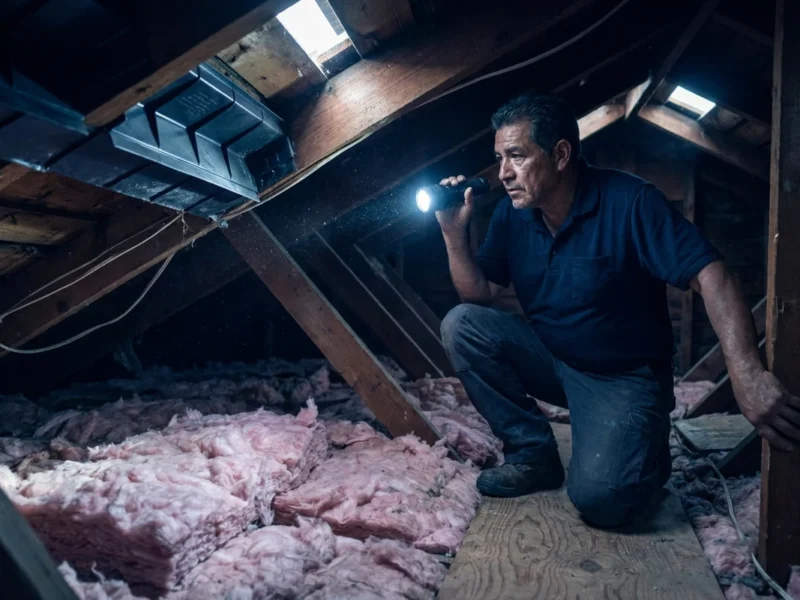
This cannot be fully answered without getting on the roof, and sometimes not until the old material is torn off. Deck damage (rotted or soft sheathing, damaged structural boards) changes the calculus entirely; a flashing replacement over compromised decking is not fixing the problem. A contractor who flags potential deck issues in advance and explains how additional deck repair is priced (per board? per section?) is being transparent. One who says “we’ll figure it out” is handing you avoidable uncertainty.
Repair or Replace: The Cost Math
Repair buys time. The question is how much, and what it costs. Say your roofer quotes $2,400 to repair a 22-year-old roof, with a $15,500 replacement quote. The repair looks cheaper. But if that 22-year-old roof fails in three years, which is realistic, you have spent $2,400 and still need $15,500: total outlay $17,900 for the same outcome, just delayed.
If the repair holds seven or eight years and you replace on your schedule in 2033, the math improves: the repair is a real expense, but you had years of cash-flow benefit from deferring the large check. The inflection point, at what age and condition a repair is more likely to buy seven years versus three, is exactly what an honest inspection tells you. For a full NJ-specific cost breakdown, see our roof replacement cost guide, and the repair vs replacement guide.
Repair or Replace: What Honest NJ Contractors Tell You
A legitimate contractor presents both options, explains what they found, shows you the evidence, and tells you what repair costs versus replacement, then lets you decide. They do not steer you toward replacement because it is a larger job, and they do not call a clearly failing roof “fine.”
Red flags to watch for:
- Replacement recommended without a written report or photos
- A contractor who discourages a second opinion or a written assessment
- A verbal-only estimate with no itemization
- A high-pressure close (“I can only hold this price until Friday”)
- No discussion of repair as an option on a mid-age roof
- No proof of insurance or NJ HIC registration offered
None of these individually proves dishonesty. Combined, they are a reason to pause.
Decide repair-or-replace on evidence, not a guess
A free CRS inspection gives you photos, condition ratings by zone, and a clear written repair-or-replace recommendation for your specific roof.
The Written Assessment You Should Demand
Before you make a repair-or-replace decision, particularly on a roof 15 years or older, get a written inspection report. The National Roofing Contractors Association recommends a full-system assessment of field shingles, flashings, penetrations, and decking, not just the leak area.
A CRS roof assessment covers every slope and zone with photos of specific problem areas, condition ratings, and a clear written recommendation. If repair is the right call, we say so and price it; if replacement is warranted, we explain why with documentation. The written findings give you specifics to reference when comparing other estimates. It costs nothing and protects you from a $15,000 decision based on a verbal opinion. Permit requirements are set by the NJ Division of Codes and Standards (a standard single-family re-roof is ordinary maintenance and needs no permit).
Repair vs replacement (scenarios) · Roof replacement cost in NJ · how long a roof lasts · Monmouth County
Last updated August 17, 2026. Written by the Certified Roofing Specialists Inc. team, licensed New Jersey roofing contractors serving Monmouth, Ocean, Middlesex, Somerset, and Union Counties.
Common questions
Frequently Asked Questions
Should I repair or replace my roof in NJ?
It comes down to four things: roof age (under 10 years, repair; 25-plus, replace), whether the damage is isolated or widespread, how many times it has been repaired before, and whether the decking is sound. On a roof 15 years or older, get a written inspection with photos before making a $15,000 decision.
How can I tell if a contractor is pushing an unnecessary replacement?
Require a written inspection report with photos that show the conditions behind the recommendation. Red flags include a verbal-only estimate with no itemization, discouraging a second opinion, and a high-pressure close (“I can only hold this price until Friday”). None alone proves bad faith, but combined they are a reason to pause.
Does replacing my roof in NJ require a permit?
A standard single-family re-roof is classified as ordinary maintenance in New Jersey and does not require a building permit. Permits apply to structural work (altering rafters or the roof structure), rooftop solar, and condominium or multi-unit buildings. Confirm specifics with your local construction office.
-

What’s Included in a Roof Inspection in NJ?
What is included in a roof inspection in NJ? See what a real inspection covers, from flashing and…
-
How Long Does a Roof Replacement Take in NJ?
How long does a roof replacement take in NJ? Most single-family homes finish in one day, 6 to…
-
Roof Ventilation in NJ: What It Does and What Poor Airflow Costs You
Roof ventilation NJ: why proper attic airflow protects your shingles, warranty, and energy bill, plus the signs your…