Roof Ventilation in NJ: What It Does and What Poor Airflow Costs You
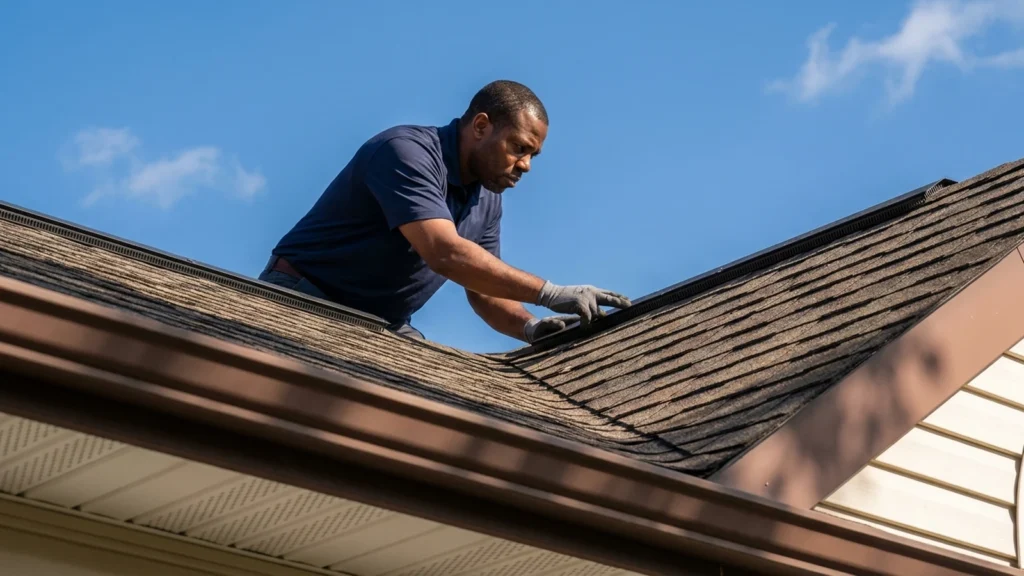
Roof ventilation NJ problems quietly shorten the life of otherwise good shingles. Roof ventilation is the most common reason NJ homeowners get far less shingle life than the warranty promises. A 30-year shingle on a poorly ventilated NJ attic can fail at 18 to 20 years. The shingle did not fail; the system around it did. Proper ventilation pulls cool air in at the soffits and pushes hot, moist air out at the ridge, which protects shingles from summer heat and prevents winter ice dams. NJ code sets the minimum, and most early roof failures trace back to missing it.
Ventilation is also one of the most overlooked items in a roofing bid. Plenty of contractors replace shingles; fewer inspect the ventilation system and correct what is wrong as part of the job. The result is a brand-new roof on a flawed system, headed for the same early failure. Here is what ventilation does, what code requires, and what getting it wrong actually costs.
Roof Ventilation NJ: What It Actually Does
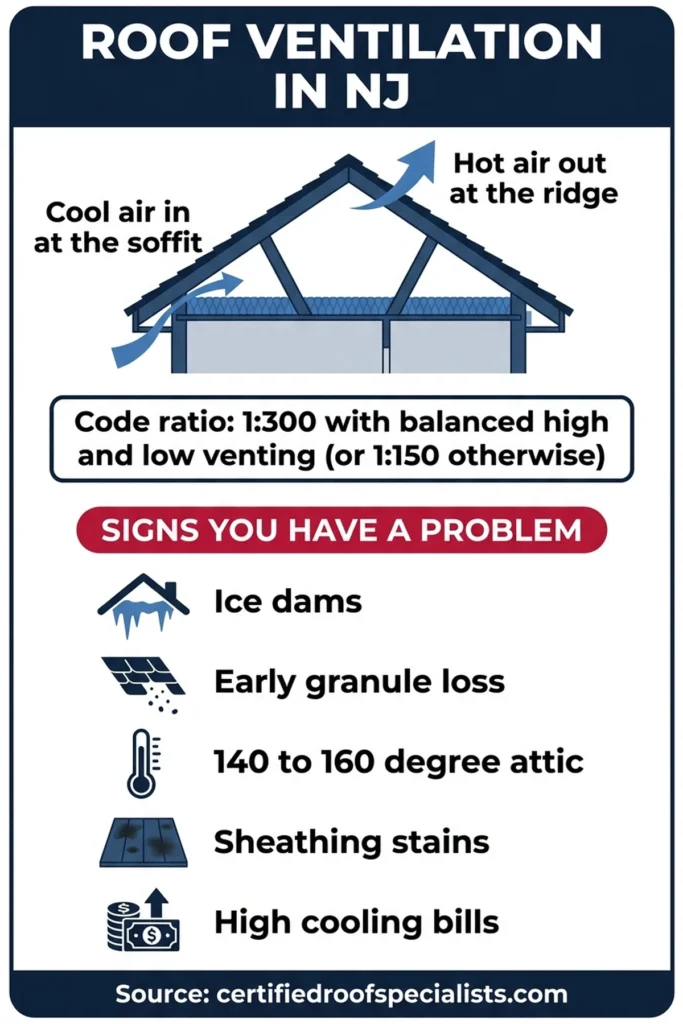
Proper ventilation creates a continuous airflow path: cool outdoor air enters at the soffit vents, rises through the attic, and exits at the ridge vent. That constant exchange protects two things, your roof’s lifespan and your energy bills.
In summer, an unventilated NJ attic routinely hits 140 to 160 degrees. That heat bakes the underside of the shingles, drives off the oils they need for flexibility, and speeds granule loss, none of which is visible from the ground until it is advanced.
In winter, a well-ventilated attic stays close to outdoor temperature. Without that, heat escaping from the living space warms the deck, melts snow at the ridge, and the meltwater refreezes at the cold eave into an ice dam. Water backs up behind the dam, works under the shingles, and enters the house. An ice dam is a ventilation failure, not a shingle failure.
What NJ Code Requires for Roof Ventilation
NJ follows the International Residential Code, which sets the minimum net free vent area (NFVA) against attic floor area:
| Ratio | When it applies | NFVA for a 1,500 sq ft attic |
|---|---|---|
| 1:300 | Balanced venting, at least half within 3 ft of the ridge, rest at the eaves | 5 sq ft (the correct target) |
| 1:150 | Venting not balanced between low and high positions | 10 sq ft |
The 1:300 balanced system is what a properly sized ridge vent plus continuous soffit vents achieves. One catch: net free area is not the same as a vent’s physical size. Each vent has a rated NFVA after accounting for mesh and baffles, so counting vents is not enough; the real NFVA has to be calculated against the attic. The standards are published by the NJ Division of Codes and Standards, and Energy Star covers the energy side of balanced attic ventilation.
Signs Your NJ Home Has a Ventilation Problem
- Ice dams at the eaves in winter, the classic signature of warm air reaching the attic and triggering the melt-refreeze cycle.
- Granule loss accelerating in years 10 to 15 on a 30-year shingle points to heat damage from below; check gutters for early granule piles.
- Attic more than 10 to 15 degrees above outdoor temperature on a hot day means restricted airflow; a balanced system runs within 5 to 10 degrees.
- Dark staining or early mold on the sheathing without an active leak indicates trapped condensation.
- High cooling bills despite adequate insulation, because a 150-degree attic radiates heat down through the ceiling. Check ventilation before adding insulation.
The Ventilation Systems CRS Finds in NJ Homes
| System | Verdict |
|---|---|
| Ridge vent + continuous soffit vent | Correct. Meets the 1:300 balanced ratio with no mechanical help. The benchmark. |
| Box vents, no soffit intake | Common problem. No intake means little air moves; adding box vents does not fix blocked soffits. |
| Powered attic fan | Frequently counterproductive. Can pull conditioned air from the house; not recommended as the primary strategy. |
| Gable-only venting | Weak. Works only when wind cooperates; the center of the attic stays hot and humid. |
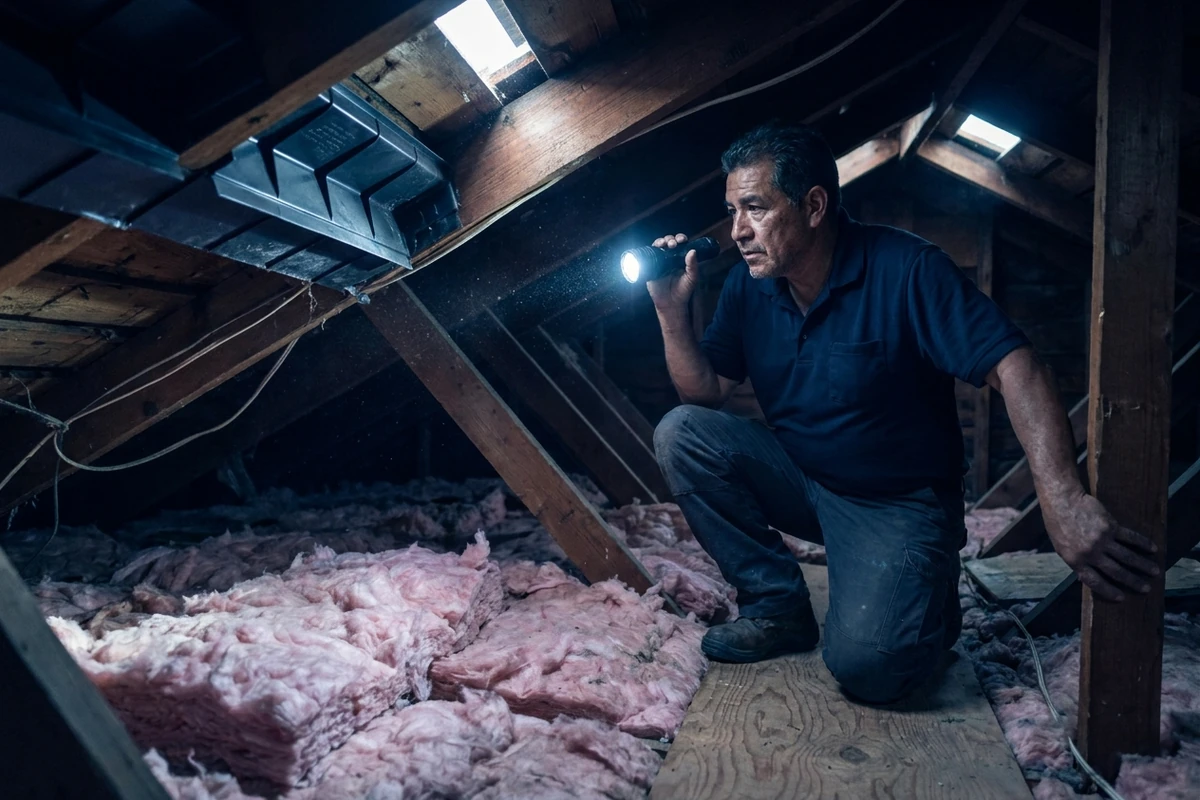
The dominant failure in NJ’s 1960s to 1980s ranches and capes is blown-in insulation pushed out to the eave, physically blocking the soffit intake. The fix is rafter vents (baffles) that hold insulation back and keep the air path open, cheap to add during a replacement and far more disruptive afterward. This is also a warranty issue, because inadequate ventilation can void coverage; see what voids a roof warranty in NJ.
Make sure your new roof sits on a system that works
Every free CRS inspection checks soffit intake, ridge vent function, and whether insulation is choking your airflow, so a new roof does not fail early on a flawed system.
What Poor Ventilation Costs in Real Numbers
| Cost | What it adds up to |
|---|---|
| Shortened shingle life | A $12,000 to $18,000 replacement 8 to 12 years early, no storm involved |
| Ice dam repair | $1,500 to $4,000 per event for drywall, insulation, and mold, compounding over years |
| Cooling load | 10 to 15% higher; roughly $240 to $360 a year on a $2,400 cooling bill |
Correcting ventilation alongside a replacement, adding baffles, clearing soffits, upgrading to continuous ridge vent, costs a fraction of a standalone job. So before you sign a roofing quote, ask whether the contractor inspects the existing ventilation, physically checks soffit clearance through the rafter bays, verifies the ridge vent NFVA is adequate, and whether any correction is in the price or a separate line. Not addressing ventilation during a replacement is a choice with a 10-year price tag attached. For how scope and price connect, see our Monmouth County cost guide.
Roof replacement service · What voids a roof warranty · NJ roof replacement cost · Edison roofing
Last updated August 26, 2026. Written by the Certified Roofing Specialists Inc. team, licensed New Jersey roofing contractors serving Monmouth, Ocean, Middlesex, Somerset, and Union Counties. Figures are 2026 estimates, not quotes.
Common questions
Frequently Asked Questions
Why does roof ventilation matter in NJ?
Poor ventilation is the most common reason NJ roofs fail early. An unventilated attic can hit 140 to 160 degrees in summer, baking the shingles from below and driving off the oils they need to stay flexible. In winter, trapped heat melts snow and causes ice dams. A 30-year shingle can fail at 18 to 20 years.
How much attic ventilation does NJ code require?
NJ follows the IRC: one square foot of net free vent area per 300 square feet of attic floor when venting is balanced high and low (at least half within three feet of the ridge), or per 150 square feet otherwise. A balanced ridge-and-soffit system at 1:300 is the correct target.
Are powered attic fans a good idea in NJ?
Usually not as a primary strategy. When the soffit intake cannot keep up, a powered fan pulls air-conditioned air out of the living space through ceiling gaps, sometimes costing more than it saves. A balanced ridge-and-soffit system moves air without electricity, which is why CRS does not recommend powered fans as the main solution.
-

Emergency Roofing in NJ: Storm Damage Response
Emergency roofing NJ: what to do after storm damage, how fast to get a tarp on, what it…
-
Community Association Roofing in NJ: A Property Manager’s Guide
Community association roofing NJ: a property manager guide to multi-building bids, board-ready scopes, reserve-study documentation, and scheduling.
-
Insurance Claim for an Old Roof in NJ: What to Know
Insurance claim for an old roof in NJ: how age cuts your payout, ACV vs RCV explained, what…